
Kid day care security
Richmond Hill Daycare Tragedy Highlights Ongoing Safety Gaps Across Canada
Richmond Hill, Ontario — 2025.
A tragic vehicle collision at a daycare in Richmond Hill once again brought national attention to the lack of physical safety protections around childcare facilities in Canada.
The incident resulted in the death of a young child and left several others injured, deeply affecting families, daycare staff, and the broader community. As with previous tragedies, the event raised urgent questions about why so many childcare facilities remain exposed to vehicle intrusion risks near parking areas, roadways, and drop-off zones.

Immediate Action by the Private Sector
In the absence of funding, standards, or rapid government assistance, Bollard Canada moved quickly to provide on-site support and physical safety measures at no cost, working alongside with Ontario partner Shane Fancing to help secure the facility and support the staff during a moment of crisis.
A Human Moment Behind the Headlines
When Bollard Canada first reached out to the Richmond Hill daycare, Mr. Peter initially believed the call was coming from yet another company attempting to profit from the tragedy.
He was wrong.
“I told him clearly,” recalls Mr. Paul Morin,
“I am not calling to sell anything. I want to help you — at no cost.”
At that moment, Mr. Peter’s voice began to shake. He became emotional and broke down on the phone. The realization that someone was offering help without expecting anything in return was overwhelming.
Shortly after that call, Mr. Morin boarded a plane and traveled to Richmond Hill to meet the daycare team in person.
What he encountered on site left a permanent mark.
The management staff appeared emotionally drained — visibly shaken and struggling to process what had happened. During the visit, the daycare manager broke down in tears, telling him:
“It should have been me. I was sitting at my desk, right next to where the vehicle entered the building.”
Mr. Morin was walked through the damaged area and saw firsthand the path of destruction.
The vehicle had smashed through the front glass, entered a classroom, crashed through a wall, continued into another classroom, passed through yet another wall, and finally came to rest in the last classroom.
“That image will stay with me for the rest of my life,” Mr. Morin said.
“I can only imagine how terrifying that moment was for the children and the staff.”

Ontario's stricter parking rules after deadly daycare crash cause confusion, raise accessibility concerns
Ministry of Education Solution
All licensed child care centres in Ontario are to prevent the use of parking spaces that pose a risk to children’s safety: Any parking spaces that are directly adjacent to child care facilities (e.g., entryways, playgrounds, exterior walls of program rooms, windows, or areas where children gather), with the exception of accessible spaces, should be blocked off and not used until additional safety measures have been put in place. You may wish to use pylons, signage, temporary barriers or staff vehicles to block these parking spaces and keep them inaccessible during the hours of child care operation. Where a purpose-built vehicle barrier is already installed and provides sufficient protection, these adjacent parking spaces may continue to be used. This applies to all child care facilities with the exception of those located in private residences.
New Regulations, But No Real Solutions
Following the tragedy, the Government of Ontario introduced new regulatory requirements for daycares. While presented as a response, many daycare operators report that these measures increase operating costs without providing funding or practical solutions to implement effective physical protection systems.
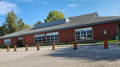
In several cases, authorities closed parking areas in front of daycare facilities, shifting the responsibility and cost of compliance entirely onto daycare owners. These closures often resulted in substantial invoices for redesigns, traffic changes, or temporary measures — costs that many operators simply cannot absorb.
As a result, daycares are left in a difficult position:
expected to comply with new rules, while lacking the financial means to install permanent, proven safety solutions.
This approach has raised concerns within the childcare sector, particularly when physical protection measures such as bollards — known to be effective but costly — are required without any accompanying financial support.
Supporting Daycares Through a Pilot Safety Program in the GTA
Daycares need support, and for this reason Bollard Canada is launching a pilot safety assistance program in the Greater Toronto Area (GTA).
This pilot program is designed to help daycares that require physical protection but do not have the financial means to implement it on their own. Qualified daycares will be offered financial assistance with zero-interest financing, making essential safety measures accessible without added financial pressure.
The program will provide a turnkey, hands-off solution, including:
* Supply and installation of protective bollards
* Concrete work and anchoring
* Excavation (if required)
* Full site cleanup after installation
All work will be completed in collaboration with Bollard Canada’s Ontario partners, ensuring compliance with local conditions and professional standards.
⚠️ This is a limited pilot project. Only 10 daycares will be selected.
Daycares located in the GTA are encouraged to contact Bollard Canada as soon as possible to determine eligibility and apply for participation in the program.*
The program will initially focus on Quebec and Ontario GTA with plans to expand across other Canadian provinces.
A child is the future of our society.
Protecting them today means protecting our tomorrow.
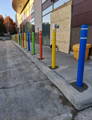
This photograph shows actual safety work carried out by Shane Fence and Bollard Canada Inc. at a daycare in Richmond Hill.
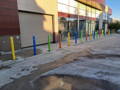

Bollard installation at the Richmond Hill daycare


“ The Children did not die in vain.
If standards do not yet exist, we will act anyway.”
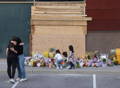
Photo credits:
The images used in this report are sourced from CBS News ,CTV news , and Bollard Canada Inc. They are presented for informational and illustrative purposes to reflect real-world incidents and preventive safety solutions related to daycare environments